Author name: admin

atsMantra, HR Recruitment

What Is an Applicant Tracking System (ATS)? Benefits, Features & How It Works

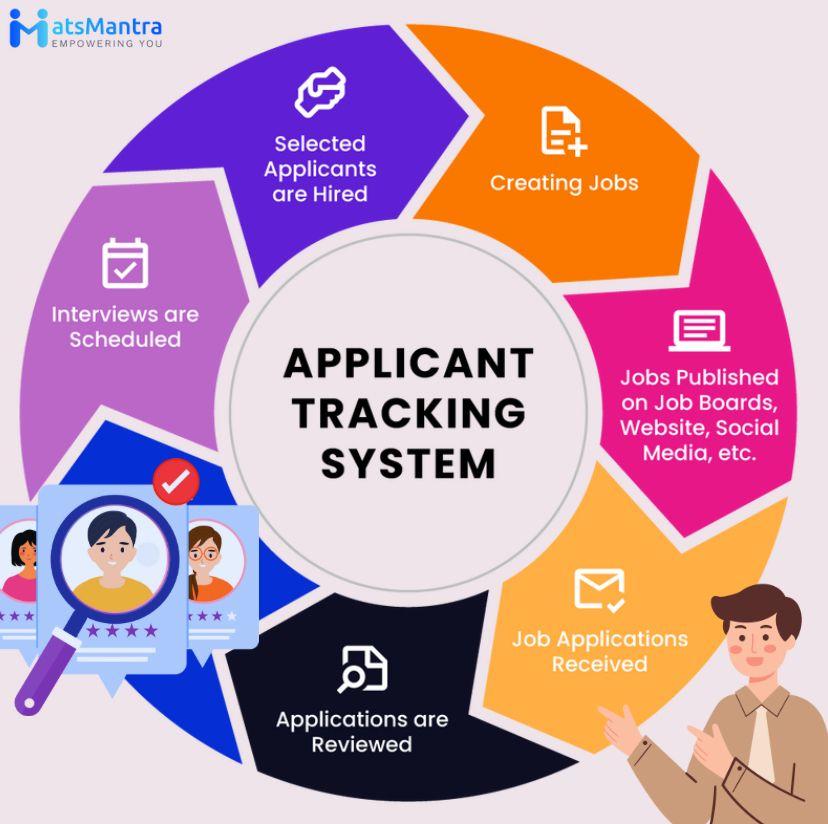
Here’s Why You Should Use One A lot of work and planning goes into your recruitment process, from sourcing candidates to reviewing resumes and conducting interviews. Keeping track of each step and multiple candidates can be overwhelming, especially when you are hiring at scale. It takes an average of five candidates to make one hire. If your company has 100 jobs to fill, that is five candidates per job and 500 applications to be successful. How can you keep up? This is where your ATS comes in.   What is an ATS? And how does an ATS work? We break down the role of ATS in recruiting, why you should consider using one and how to determine which ATS is right for you.   What is an ATS?   An applicant tracking system, or ATS, is a tool that enables your company to track and measure each step of its recruitment process. An ATS collects and stores information about your applicants, such as where they were sourced and which stage of the application process they are at. Modern applicant tracking systems are more than a glorified spreadsheet. Today’s ATS includes end-to-end hiring solutions, like scheduling tools, candidate relationship management (CRM) software, and seamless integration with your human resource information system. An ATS transforms your recruitment process into a streamlined, efficient, and technologically advanced operation.  How do applicant tracking systems work?  Candidates are looking for application processes that are easy and user-friendly. The best applicant tracking systems allow people to easily apply for a position via any device without needing to log in.  This means that employers benefit from securing a larger pool of applicants, who can then be tagged a labelled accordingly, based on the info in their resumes.  More specifically, what are the benefits of an applicant tracking system?  Streamlining your hiring process becomes seamless with the implementation of an Applicant Tracking System (ATS). Imagine navigating through the pain points of your hiring workflow without a robust platform in place. In the absence of an efficient system, you might encounter inconsistencies in candidate tracking and misalignments among your hiring team, particularly if you rely on spreadsheets and emails. Building a robust talent pool and identifying top-notch candidates may prove challenging. The entire hiring journey, from job postings to interview scheduling and offer issuance, could be needlessly prolonged and arduous.  However, life post-ATS implementation presents a markedly improved scenario.  A reliable ATS:  Building a robust professional network is crucial for freelance recruiters. It is essential to establish connections with both clients and potential candidates. Actively participate in industry events, join professional associations, and leverage social media platforms to expand your network. Cultivate relationships by maintaining regular contact and offering assistance or insights whenever possible. On the other side, a good ATS:  adminrarrtech.gravitysign.in

HR Recruitment

How to Choose the Right CRM Software for Your Business

A practical guide for small businesses, startups and growing sales teams After running a business for almost eight years, one lesson has become increasingly clear to me: sales has to be one of the strongest functions in a company, closely followed by finance. A business may have an excellent product, strong technology, capable people and reliable delivery, but unless it can consistently generate sales and manage its finances well, those strengths become difficult to sustain. This naturally leads to another question that most entrepreneurs face: what should we actually do to make sales stronger? Should we hire more salespeople, spend more on digital marketing, increase cold calling, send more emails, attend exhibitions, conduct webinars or build a larger field-sales team? In practice, there is rarely one channel that solves the problem. Businesses generally need to use a mix of relevant sales and marketing channels that they can execute and afford, including cold calling, cold emails, LinkedIn, digital campaigns, references, networking, webinars, seminars, exhibitions, outdoor marketing and field sales. Generating leads, however, creates another operational challenge. Imagine 500 leads entering a business from several different sources. Different salespeople are speaking to them, conversations are happening over calls, email, WhatsApp and physical meetings, and every prospect is at a different stage. One person asks to be contacted after three days, another wants a proposal, someone wants a demonstration, another is waiting for management approval and someone else may have a requirement only in the next quarter. Managing this reliably becomes difficult very quickly. This is where good CRM software starts becoming important. More Leads Do Not Necessarily Mean More Sales One of the common responses to poor sales performance is to generate more leads. More leads certainly help, but before increasing marketing expenditure, a business should first understand what is happening to the leads it already receives. Suppose a company receives 300 enquiries in a month. The team manages to speak with 180 of them, 50 show some level of interest, 20 ask for additional information and eight request a demonstration. At the end of the month, management generally remembers the eight demonstrations because they are visible opportunities. The more important question is what happened to the remaining prospects. Some may genuinely be irrelevant, but others may have said, “Call me next month,” “Send the details first,” “We already have a vendor,” “There is no budget right now,” or simply, “Not interested.” A salesperson may interpret these responses as closed leads, while an experienced sales process should recognise that some of them may simply not be ready today. Good CRM lead management helps the business preserve this context and revisit opportunities at an appropriate time. A Practical Use Case: When a Cold Lead Comes Back Consider a situation that many B2B businesses encounter. A salesperson cold calls a manufacturing company to introduce a software solution. The person receiving the call is polite but says that the company does not need the product at present. In many sales teams, the lead would be marked as not interested and eventually forgotten. A better process would retain the lead in the CRM along with the conversation history and an appropriate future follow-up. A few weeks later, instead of repeatedly calling and asking whether there is a requirement, the prospect might receive useful information about a business problem that the software addresses. There may be no response. After some time, another relevant communication could explain how businesses lose visibility when important processes remain dependent on Excel. Later, a short case study could demonstrate how another organisation improved its process through automation. Nothing may happen immediately. Then, several months after the original cold call, the prospect may contact the company and ask for a product demonstration. To the prospect, this may feel like a fresh enquiry. To the sales organisation, however, it is the result of the original cold outreach followed by patient, relevant and structured communication. The initial salesperson created awareness, subsequent communication maintained visibility, and an internal requirement eventually created the right timing. This is an important reason for using CRM software for business. A lead that does not convert today is not necessarily a poor lead. Sometimes the requirement, budget or internal priority simply does not exist yet. The CRM should help the organisation remember the relationship without depending entirely on the salesperson’s memory. The Cost of a Missed Follow-Up Consider a salesperson handling 150 active prospects. One asks for a call on Monday afternoon, another wants a revised commercial proposal on Wednesday, a third asks to reconnect after the financial year closes, a fourth wants a demonstration involving the plant head and another wants a customer reference before taking the discussion forward. Managing these commitments from memory is unreliable. An Excel sheet can improve the situation, but it still depends heavily on the salesperson opening it, updating it consistently and remembering which actions require attention. The problem becomes more serious when the salesperson leaves the organisation. The replacement may receive a spreadsheet containing company names and phone numbers but very little context about months of conversations and relationship history. A good CRM solution for businesses reduces this dependency. The relationship with a prospect should belong to the organisation rather than remaining inside an individual employee’s memory, diary, spreadsheet, email inbox or mobile phone. Even one missed follow-up can mean losing a genuine opportunity that the business has already spent time and money creating. What Should CRM Software Actually Do? CRM stands for Customer Relationship Management, but many businesses evaluate CRM as if it were mainly a digital contact book. A useful CRM should do much more. It should help management understand how many leads are entering the organisation, where they came from, who owns them, when the last interaction took place, what was discussed, what needs to happen next, which follow-ups are overdue and which opportunities have remained inactive for too long. It should also give visibility into proposals, demonstrations, expected deal values, sales stages and pipeline movement. If management still needs

DPDP compliance services for Delhi NCR businesses
ChromaDB

DPDP Act 2023: What Businesses in Delhi NCR Need to Know

Data has quietly become one of the most valuable assets of almost every organisation. A hospital stores patient records and diagnostic reports, a university maintains years of student and applicant information, an NBFC processes KYC and financial information, while even a small business may have employee records, customer details, CCTV footage and thousands of contacts stored across its ERP, CRM, emails and Excel sheets. The Digital Personal Data Protection Act 2023, commonly referred to as the DPDP Act 2023, brings a new level of accountability to the way organisations collect, use, store, share and eventually erase digital personal data. For organisations operating in Delhi, Gurugram, Noida, Faridabad, Ghaziabad and the wider NCR, this is particularly relevant. Delhi NCR has a very high concentration of schools, universities, hospitals, financial institutions, IT companies, manufacturing businesses and service organisations. Delhi alone reported 5,556 recognised schools with around 44.91 lakh students in 2024-25. The Economic Survey of Delhi 2025-26 also reports 1,181 private hospitals and nursing homes as of December 2025. Add the education and healthcare ecosystems of Noida, Gurugram, Faridabad and Ghaziabad, and the volume of personal data being processed across NCR becomes enormous. This is why DPDP Act compliance in Delhi NCR deserves management attention today, rather than being treated as something that can be addressed when a problem arises. What is the DPDP Act 2023 and Why Does It Matter? The Digital Personal Data Protection Act provides India’s legal framework for processing digital personal data. At its heart, the idea is fairly straightforward: organisations may legitimately need personal data to conduct business and provide services, but the individuals to whom that data relates also have a right to protection of their personal data. Think about an ordinary company. It may have employee names, addresses, photographs, PAN information, salary details and bank accounts. Its sales team may have thousands of customer names, email addresses and mobile numbers. HR may have CVs of people who applied for jobs several years ago. CCTV systems may contain employee and visitor footage. Marketing teams may maintain old databases of prospects, while information may also exist with payroll providers, cloud platforms, CRM vendors and other service providers. The important question under the DPDP Act for businesses is therefore not simply whether the company has a privacy policy. The bigger question is whether the organisation actually understands its personal data. What are you collecting, why are you collecting it, where is it stored, who can access it, whom are you sharing it with, how are you protecting it, how long do you need it and what happens when you no longer need it? These questions form the foundation of a practical DPDP compliance framework. Why Delhi NCR Organisations Should Start Early It would not be correct to claim that the Government has officially announced that Delhi NCR will be the first region targeted for DPDP audits. There is no need to make such a claim either. The scale of personal-data processing in the region provides enough reason for organisations to prepare. Delhi NCR combines a large population with a dense concentration of educational institutions, healthcare facilities, corporate offices, financial-services companies, technology businesses and manufacturing units. Many of these organisations have also been operating for decades, which means the challenge is not restricted to the data being collected today. There can be years of historical personal data sitting across old applications, servers, backup systems, emails, laptops, spreadsheets and third-party platforms. The longer an organisation waits, the larger this data estate can become. DPDP Act compliance is therefore easier to approach as a planned exercise than as an emergency project initiated after a complaint, security incident or regulatory requirement. Education and healthcare illustrate this particularly well. Education: A Simple Example That Explains the DPDP Challenge Consider a university in Delhi NCR receiving 25,000 applications for 3,000 available seats. During the admission process, applicants may provide their name, photograph, date of birth, mobile number, email address, residential address, parents’ information, marksheets, identification documents, entrance examination information and payment details. The university eventually admits 3,000 students. The obvious question is: what happens to the personal data of the remaining 22,000 applicants? Some of it may remain in the admission portal. An Excel export may have been downloaded by the admission team. Documents may exist in employee email accounts. A cloud backup may contain another copy, and the technology provider operating the admission system may also hold data. Three years later, if someone asks why the university still possesses their documents, will the institution know exactly where that person’s information exists and why it is still being retained? This is where DPDP moves from being a legal subject to a management issue. For students who actually join the university, the situation becomes even more complex. Their information moves through admissions, academics, accounts, examinations, hostel administration, library systems, transport, learning-management systems, internship programmes and placement departments. After graduation, some information may move into alumni databases. A relationship that started with one admission form can create a trail of personal data across multiple departments and applications for many years. Schools have another important consideration because they routinely process children’s personal data. The DPDP framework contains specific provisions concerning children’s personal data, including requirements relating to verifiable parental consent, subject to the applicable provisions, Rules and exemptions. For schools, colleges and universities, delaying DPDP Act implementation can therefore make the eventual exercise harder. Every new academic session adds another batch of applicants, students, parents, documents, photographs, results, backups and digital records. The institution is not reducing its compliance problem by waiting; in many cases, it is increasing the volume of data that will eventually need to be understood and governed. A sensible starting point for an educational institution is a DPDP readiness assessment. Start with admissions, identify what information is collected and then follow that information through the organisation. The exercise often reveals data in places that senior management did not even know existed. Healthcare: Consider a 100-Bed Hospital Now consider a 100-bed multi-speciality hospital


Scroll to Top