

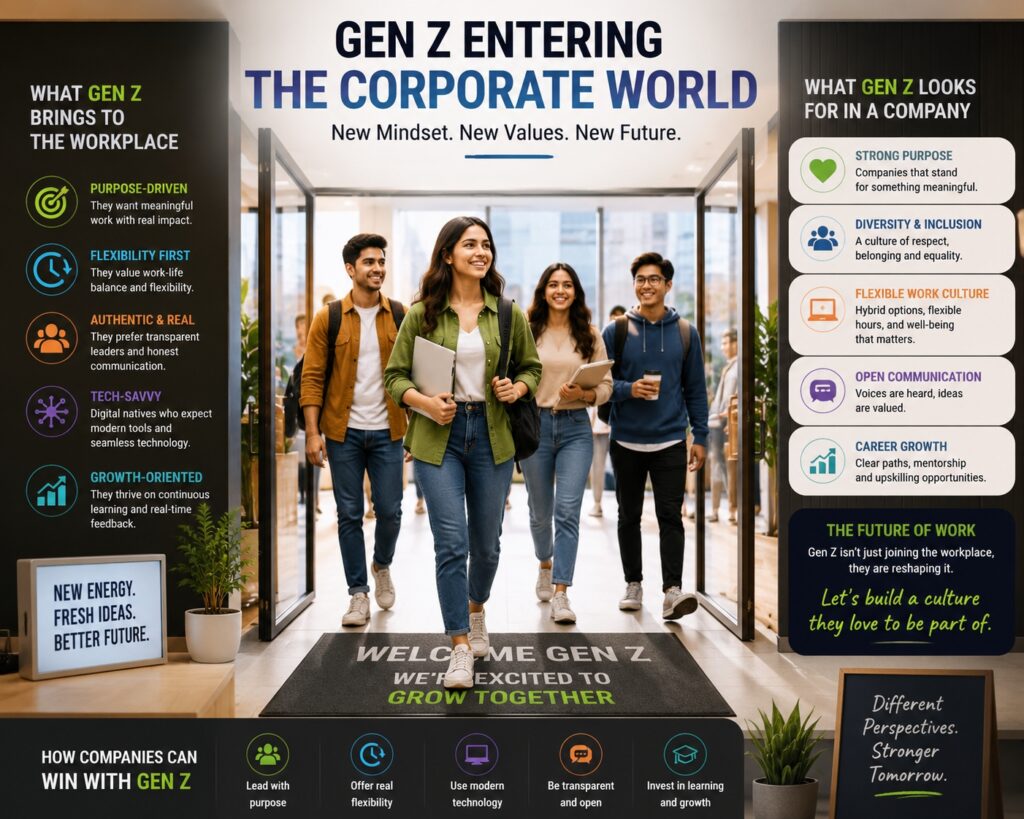
Why Cultural Fit for GenZ Matters
Gen Z is no longer the future workforce—they are actively shaping today’s workplace. Born between 1997 and 2012, this generation brings new expectations, strong values, and a fresh perspective on work culture. For HR professionals, recruiters, staffing agencies, and founders, understanding cultural fit for Gen Z is essential to attract, engage, and retain top talent.
Unlike previous generations, Gen Z prioritizes:
- Purpose over paycheck
- Flexibility over rigid schedules
- Authenticity over hierarchy
This shift is redefining how companies hire, manage, and build workplace culture.
What is Cultural Fit for Gen Z?
Traditional Cultural Fit (Old Approach)
Previously, cultural fit meant hiring candidates who:
- Shared similar backgrounds
- Had matching personalities
- Could easily “blend in”
While this created comfort, it often resulted in:
- Limited diversity
- Reduced innovation
- Lack of fresh perspectives
Modern Cultural Fit (Gen Z Approach)
Today, cultural fit has evolved. For Gen Z, it focuses on:
- Alignment with values, not personalities
- Contributing to culture, not just adapting
- Encouraging diversity and inclusion
It’s no longer about “fitting in”—it’s about adding value.
Key Traits of Gen Z Employees
Understanding Gen Z at work is the foundation of building the right culture.
Digital Natives
They expect fast, seamless, and tech-enabled systems.
Purpose-Driven
They want meaningful work that creates real impact.
Authenticity-Focused
They prefer transparent leadership and honest communication.
Independent Yet Collaborative
They value autonomy but also thrive in team environments.
Growth-Oriented
They seek continuous learning and real-time feedback.
What Cultural Fit Means for Gen Z in the Workplace
1. Flexibility and Work-Life Balance
Gen Z strongly prefers:
- Remote or hybrid work models
- Flexible working hours
- Mental health awareness
Organizations offering flexibility often attract more Gen Z talent than those offering higher salaries.
2. Purpose-Driven Work Culture
Gen Z evaluates employers based on:
- Mission and vision
- Social and business impact
Companies with a clear purpose and strong values stand out in hiring.
3. Diversity and Inclusion
For Gen Z, diversity is not optional—it’s expected. They look for:
- Inclusive hiring practices
- Equal growth opportunities
- Representation in leadership
A lack of diversity can significantly impact your employer brand.
4. Technology-Driven Workplace
Outdated systems are a major turn-off.
Gen Z expects:
- Modern tools and platforms
- Automated workflows
- Seamless digital experiences
5. Continuous Feedback and Growth
Traditional annual reviews no longer work.
Gen Z prefers:
- Real-time feedback
- Regular performance check-ins
- Clear career growth paths
Why Traditional Hiring Fails with Gen Z
Many organizations still follow outdated hiring practices, leading to:
- Hiring for similarity instead of value
- Rigid hierarchical structures
- Lack of flexibility
- Poor communication
- Ignoring employee feedback
The result is high attrition, low engagement, and weak employer branding.
How to Build a Culture That Attracts Gen Z
To align with Gen Z expectations, companies must evolve.
Define and Communicate Your Purpose
Clearly highlight your mission, vision, and impact.
Offer Real Flexibility
Adopt hybrid models, flexible hours, and respect work-life boundaries.
Invest in Modern Technology
Upgrade hiring, collaboration, and performance systems.
Promote Transparency
Encourage open communication across all levels.
Focus on Learning and Growth
Provide:
- Upskilling programs
- Mentorship opportunities
- Clear career progression
How Recruiters Can Assess Cultural Fit for Gen Z
Recruiters and staffing agencies play a critical role in hiring Gen Z talent.
Ask the Right Questions
- What type of work environment helps you perform best?
- What motivates you beyond salary?
- How important is flexibility in your role?
Evaluate Beyond Skills
Focus on:
- Value alignment
- Adaptability
- Communication style
Use Modern Hiring Tools
Advanced ATS platforms can help match candidates based on both skills and cultural preferences.
Common Mistakes to Avoid
When hiring Gen Z, avoid:
- Assuming Gen Z is lazy or entitled
- Offering superficial perks instead of meaningful work
- Ignoring employee feedback
- Using outdated hiring processes
- Lack of transparency
Gen Z values authenticity over surface-level benefits.
Conclusion: Building a Future-Ready Workplace
Understanding cultural fit for Gen Z is not about changing everything—it’s about evolving with the workforce.
Gen Z is driving organizations toward:
- Inclusive work cultures
- Flexible work environments
- Purpose-driven missions
- Technology-enabled processes
Companies that adapt will not only attract Gen Z talent but also build stronger, future-ready organizations.
Because today, culture isn’t just about fitting in—it’s about growing together.

Tarun Singla writes about Digital Transformation in HR, exploring how Artificial Intelligence, automation, and emerging HR technologies are reshaping recruitment and talent management. With 10+ years of experience in IT recruitment, staffing, and talent acquisition, he brings practical industry insights into AI-powered recruitment, hiring automation, Applicant Tracking Systems (ATS), and the future of work. Through his work with RARR Technologies and atsMantra, he shares perspectives on how organizations can embrace technology to build smarter, faster, and more efficient hiring processes.