
Best CRM Software in India: Features, Benefits and How to Choose the Right One
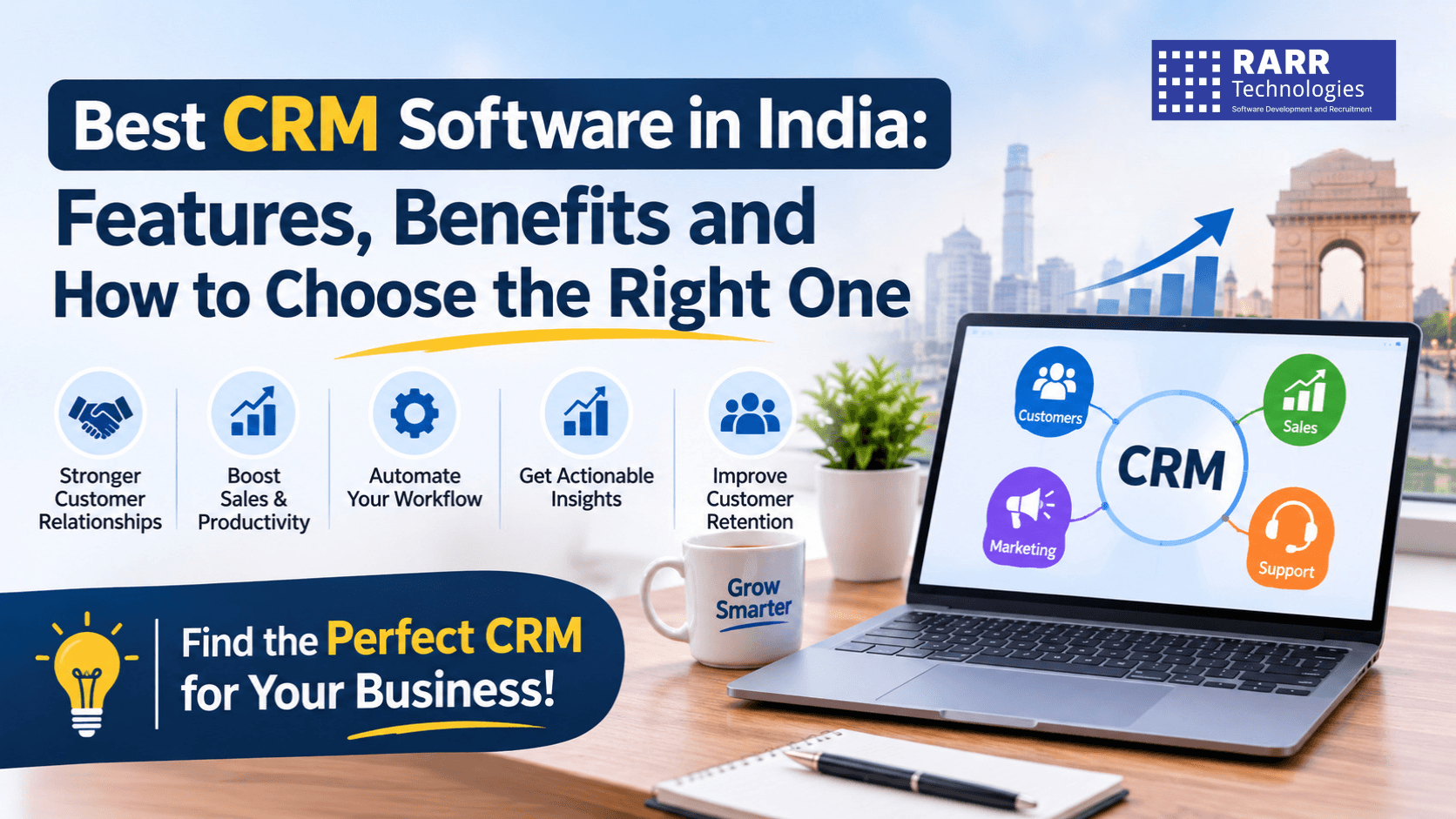
Managing customer relationships is one of the most important aspects of running a successful business. Whether a company operates in retail, IT, manufacturing, real estate, healthcare, education or professional services, building strong customer relationships directly influences sales, customer satisfaction and long-term growth. However, as businesses expand, managing customer information, tracking leads, following up with prospects and maintaining communication through spreadsheets or manual processes becomes increasingly difficult.
This is where CRM software plays an important role. The Best CRM Software in India helps businesses organise customer information, manage sales activities, automate repetitive tasks and improve communication across departments. Instead of storing customer details in multiple files, companies can use a centralised platform to access important information and monitor their entire customer journey.
Today, businesses across metropolitan cities and emerging commercial hubs are adopting digital solutions to improve operational efficiency. The demand for CRM Software in Delhi NCR, Gurugram, Noida and Faridabad is growing as organisations look for smarter ways to manage leads, improve sales performance and deliver better customer experiences.
But with so many CRM platforms available, how can a business choose the right solution? This guide explains what CRM software is, its essential features, major benefits, different types of CRM systems and the factors businesses should consider before investing in one.
What Is CRM Software?
CRM stands for Customer Relationship Management. It refers to a business strategy and technology used to manage interactions with existing customers and potential clients.
Customer Relationship Management Software is a digital platform that stores customer details, tracks sales opportunities, manages communication history and helps businesses maintain long-term relationships. It provides a central location where employees can view customer information, monitor enquiries and manage follow-up activities.
For example, when a potential customer submits an enquiry through a company's website, the CRM system can capture their information and assign the lead to a sales representative. The representative can then contact the prospect, record the conversation, schedule a follow-up and update the lead status.
This process helps businesses avoid missed opportunities and ensures that every customer receives timely attention.
Modern CRM platforms also include automation, reporting, analytics, marketing integrations and customer support management. These capabilities make CRM software useful for businesses of different sizes and industries.
Why Do Businesses Need CRM Software in India?
The Indian business environment is becoming increasingly competitive. Customers expect quick responses, personalised communication and consistent service across different channels. Managing these expectations manually can become challenging, particularly when a company handles hundreds or thousands of enquiries.
CRM software helps businesses overcome these challenges by bringing customer-related activities together in one system.
Here are some important reasons why Indian businesses are investing in CRM solutions:
• Centralised Customer Information: Store customer contact details, enquiry history, purchase records and communication information in one place.
• Better Lead Management: Track leads from their initial enquiry to final conversion.
• Improved Sales Productivity: Help sales teams organise their daily activities and focus on valuable opportunities.
• Timely Follow-Ups: Schedule reminders and reduce the chances of missing important customer interactions.
• Better Customer Experience: Maintain consistent communication and respond to customer requirements more efficiently.
• Performance Tracking: Monitor sales targets, employee performance and business growth through reports and dashboards.
For growing organisations, investing in the right CRM platform is not just about managing contacts. It is about building a more organised and customer-focused business.
Essential Features of the Best CRM Software in India
Not every CRM platform offers the same functionality. Before choosing a solution, businesses should understand which features are important for their sales process and customer management requirements.
1. Lead Management and Tracking
Lead management is one of the most important CRM features. It allows businesses to capture, organise, assign and track potential customers from different sources.
A CRM system can help collect enquiries from websites, social media campaigns, email and other communication channels. Sales representatives can view lead details, update their status and record every interaction.
This makes it easier to identify interested prospects and prioritise opportunities with a higher chance of conversion.
2. Contact and Customer Management
A CRM system provides a centralised database for storing customer information. Businesses can maintain contact details, company information, previous conversations, preferences and transaction history.
Employees can access relevant customer records without searching through emails, spreadsheets or separate documents. This improves coordination and helps teams provide more personalised services.
3. Sales Pipeline Management
Sales pipeline management allows businesses to monitor opportunities at different stages of the sales process.
For example, a sales pipeline may include:
• New Enquiry
• Lead Assigned
• Contacted
• Follow-Up
• Proposal Shared
• Negotiation
• Converted
• Lost
By tracking these stages, managers can understand how many opportunities are progressing and where potential customers are dropping out.
4. Task Management and Follow-Up Reminders
Missed follow-ups can result in lost business opportunities. CRM software helps employees schedule calls, meetings, emails and other activities.
Automated reminders notify sales representatives when they need to contact a prospect. Managers can also monitor pending tasks and ensure that important activities are completed on time.
5. Sales Reports and Analytics
Reporting and analytics help businesses understand their sales performance. CRM dashboards can display information such as:
• Total leads generated
• Lead conversion rates
• Monthly sales performance
• Revenue generated
• Pending follow-ups
• Sales representative performance
• Customer acquisition trends
These insights help business owners make informed decisions and identify areas that require improvement.
6. Workflow Automation
Workflow automation reduces repetitive manual activities. Businesses can create automated processes for lead assignment, task creation, follow-up reminders and customer notifications.
For example, when a new enquiry enters the CRM system, it can automatically be assigned to the appropriate sales representative. The system may also create a follow-up task to ensure timely communication.
7. Mobile CRM Access
Sales teams often work outside the office, attend client meetings or travel to different locations. Mobile CRM access allows employees to view customer details, update lead information and manage tasks from smartphones or tablets.
This helps teams stay connected and productive even when they are away from their desks.
8. Integration with Business Tools
A CRM platform should work smoothly with the tools a business already uses. Useful integrations may include:
• Email platforms
• Website enquiry forms
• Marketing automation tools
• Business communication platforms
• Accounting and billing software
• ERP systems
• Customer support applications
Integrations reduce duplicate data entry and improve information sharing between departments.
9. Data Security and Access Control
Customer information is valuable business data. A reliable CRM solution should provide security features such as role-based access, authentication, controlled permissions and data backup.
Businesses should also review the provider's data handling practices, hosting arrangements and compliance capabilities before selecting a platform.
Major Benefits of Using CRM Software for Businesses
CRM software offers benefits beyond storing customer information. It can improve the way businesses attract prospects, manage sales activities and maintain customer relationships.
1. Better Customer Relationships
When employees have access to customer history and previous interactions, they can understand customer requirements more effectively.
Instead of asking customers to repeat the same information, sales and support teams can continue conversations with relevant context. This creates a smoother and more professional experience.
2. Increased Sales Opportunities
A CRM system helps sales representatives track potential customers and identify opportunities that need attention.
With organised lead records, timely follow-ups and pipeline visibility, businesses can reduce missed opportunities and improve their chances of converting prospects into customers.
3. Improved Team Collaboration
Sales, marketing and customer support departments often need access to the same customer information. A centralised CRM platform helps teams work with consistent records and share updates.
This reduces communication gaps and allows employees to coordinate their activities more effectively.
4. Time and Cost Savings
Manual customer management requires employees to spend time updating spreadsheets, searching for contact information and preparing reports.
CRM automation can reduce these repetitive activities, allowing teams to concentrate on sales, customer service and other important business tasks.
5. Better Customer Retention
Acquiring new customers is important, but retaining existing customers is equally valuable.
CRM software helps businesses maintain regular communication, record customer preferences and identify opportunities for repeat business. A well-organised customer management process can contribute to stronger long-term relationships.
6. Data-Driven Business Decisions
CRM reports provide useful information about customer behaviour, sales performance and lead conversion.
Business owners can use these insights to evaluate marketing campaigns, identify sales challenges and plan future business strategies.
Types of CRM Software
Different businesses have different customer management requirements. Understanding the main types of CRM software can help organisations select the right solution.
Operational CRM
Operational CRM focuses on automating daily sales, marketing and customer service activities. It helps businesses manage leads, follow-ups, communication and customer interactions.
Analytical CRM
Analytical CRM focuses on collecting and analysing customer information. It helps businesses understand customer behaviour, purchasing patterns and sales trends.
Collaborative CRM
Collaborative CRM improves information sharing between departments. It helps sales, marketing and support teams access relevant customer information and coordinate their activities.
Cloud-Based CRM
Cloud CRM allows users to access customer information through the internet without maintaining all the software infrastructure on local servers.
The growing adoption of Cloud-Based CRM Software in India reflects the demand for flexible, accessible and scalable business applications. Cloud solutions can be particularly useful for companies with remote teams, multiple offices or employees who frequently travel.
CRM Software in Delhi NCR: Growing Demand Across Business Hubs
Delhi NCR is an important business region with companies operating across technology, real estate, manufacturing, education, healthcare, consulting, retail and financial services.
As competition increases, organisations are looking for digital tools that can help them manage customer enquiries and improve sales processes.
CRM Software in Gurugram
Gurugram is home to technology companies, startups, corporate offices, real estate businesses and professional service providers. These organisations often handle enquiries from multiple channels and require structured sales processes.
CRM Software in Gurugram can help businesses organise customer records, manage sales pipelines, automate follow-ups and track employee performance.
Companies searching for Affordable CRM Software in Gurugram should compare pricing, automation features, integration options and scalability instead of selecting a platform based only on its initial cost.
CRM Software in Noida
Noida has a diverse business environment that includes IT companies, BPOs, manufacturing organisations, educational institutions and service providers.
CRM Software in Noida can help these businesses manage customer communication, track enquiries and improve coordination between sales and support teams.
Organisations exploring CRM Solutions for Businesses in Noida should consider their customer volume, number of users, reporting requirements and existing business applications before making a decision.
CRM Software in Faridabad
Faridabad has a strong presence in manufacturing, industrial operations, trading and service-based businesses. These organisations may need to manage distributors, dealers, business enquiries and long-term customer accounts.
CRM Software in Faridabad can support structured customer management by maintaining enquiry records, tracking sales opportunities and scheduling follow-ups.
Businesses looking for Sales CRM Software in Faridabad should prioritise lead tracking, contact management, sales pipeline visibility and reporting capabilities.
Best CRM Software in Delhi NCR for Growing Businesses
Choosing the Best CRM Software in Delhi NCR depends on the company's business model, customer management process and future expansion plans.
A suitable CRM solution should be easy to use, offer the required features, support business integrations and provide reliable assistance. Companies should also evaluate whether the software can support additional users and business locations as operations grow.
CRM Software for Small Businesses: Is It Worth Investing?
Small businesses often operate with limited resources and smaller teams. Managing customer information manually may seem manageable at first, but it becomes increasingly difficult as enquiries and customer accounts increase.
CRM Software for Small Businesses provides an organised way to manage leads, contacts, sales activities and customer communication without depending on multiple spreadsheets.
Some important advantages for small businesses include:
• Better organisation of customer records.
• Easy tracking of enquiries and sales opportunities.
• Timely reminders for customer follow-ups.
• Improved communication between team members.
• Access to sales reports and performance insights.
• Reduced dependency on manual processes.
Small businesses should select a CRM platform that matches their current requirements and budget while allowing them to expand when necessary.
How to Choose the Right CRM Software for Your Business
Selecting the right CRM platform requires careful evaluation. A feature-rich system may not always be suitable for every organisation. Businesses should focus on solutions that support their actual workflows.
Here are some important factors to consider before making a decision.
1. Understand Your Business Requirements
Start by identifying the challenges your business wants to solve. Do you need lead management, customer support tracking, sales automation or complete customer lifecycle management?
Prepare a list of essential requirements and use it to evaluate different CRM platforms.
2. Check the Available Features
Compare the features offered by different providers. Make sure the platform supports lead management, contact management, pipeline tracking, task reminders, reporting and automation according to your requirements.
Avoid paying for advanced features that your team may not need.
3. Evaluate Ease of Use
A CRM platform should have a simple and understandable interface. Employees should be able to add leads, update records and manage tasks without extensive technical knowledge.
An easy-to-use system also makes employee training and adoption easier.
4. Compare Pricing and Overall Costs
CRM pricing may depend on the number of users, subscription plans, storage, integrations and advanced features.
Before purchasing, check the complete cost, including implementation, training, customisation and ongoing support. A low-cost subscription may not always offer the best long-term value.
5. Check Integration Capabilities
Your CRM should connect with important business tools such as email, websites, marketing platforms and accounting applications
.
Proper integrations help maintain consistent information and reduce manual work.
6. Review Security and Data Protection
Check how the CRM provider manages customer information. Review access controls, data backup, authentication, hosting and security policies.
Indian businesses should also evaluate their applicable obligations under relevant data protection laws, including the Digital Personal Data Protection Act, 2023, where applicable.
7. Consider Scalability
Your business requirements may change as your customer base and employee strength increase. Choose a CRM solution that can accommodate additional users, new departments and changing workflows.
8. Evaluate Customer Support
Reliable technical support is important, particularly during implementation and employee onboarding.
Check whether the provider offers training, documentation, troubleshooting assistance and regular product updates.
9. Request a Product Demo
A product demonstration allows your team to understand how the CRM works in real business situations.
Test important activities such as adding a lead, assigning a sales representative, scheduling follow-ups and generating reports. This will help you evaluate whether the platform fits your daily workflow.
Common Mistakes to Avoid When Selecting CRM Software
Even a powerful CRM system may fail to deliver the expected results if businesses select or implement it incorrectly.
Avoid these common mistakes:
• Choosing software without understanding business requirements.
• Selecting a platform only because it offers the lowest price.
• Ignoring employee training and system adoption.
• Overlooking integration requirements.
• Not reviewing security and data protection practices.
• Purchasing unnecessary features.
• Failing to maintain accurate customer records.
• Not evaluating customer support and future scalability.
A successful CRM implementation requires the right technology, clear processes and employee participation.
Why CRM Software Is Important for Future Business Growth
Customer expectations and business operations continue to evolve. Companies increasingly depend on digital platforms to improve efficiency and deliver consistent customer experiences.
Modern CRM systems are also incorporating artificial intelligence, predictive analytics, conversational tools and advanced automation.
These technologies can help businesses identify sales trends, prioritise leads, automate routine communication and gain deeper insights into customer behaviour.
For Indian businesses, adopting the right CRM platform can create a stronger foundation for digital transformation. Whether a company operates from Delhi NCR, Gurugram, Noida, Faridabad or another commercial location, organised customer management can support sustainable growth.
However, technology alone cannot guarantee business success. Organisations must also establish clear sales processes, maintain accurate information and ensure that employees use the CRM system consistently.
Conclusion
Choosing the Best CRM Software in India is an important decision for businesses that want to improve customer relationships, organise sales operations and support long-term growth.
The right CRM solution can bring customer information together, simplify lead management, automate repetitive activities and provide useful insights into business performance. From small businesses to large enterprises, CRM platforms can help organisations create more efficient and customer-focused operations.
Businesses searching for CRM Software in Delhi NCR, Gurugram, Noida and Faridabad should compare features, pricing, security, integrations, scalability and support before selecting a platform.
Rather than choosing software based only on popularity or cost, focus on a solution that matches your business requirements and helps your team work more efficiently.
With the right CRM strategy and technology, businesses can build stronger customer relationships, improve sales productivity and prepare for future opportunities.
Tarun Singla
Technical Contributor & Solutions Architect at RARR Technologies
Leave a Comment
Your email address will not be published. Required fields are marked *