
Human Resources

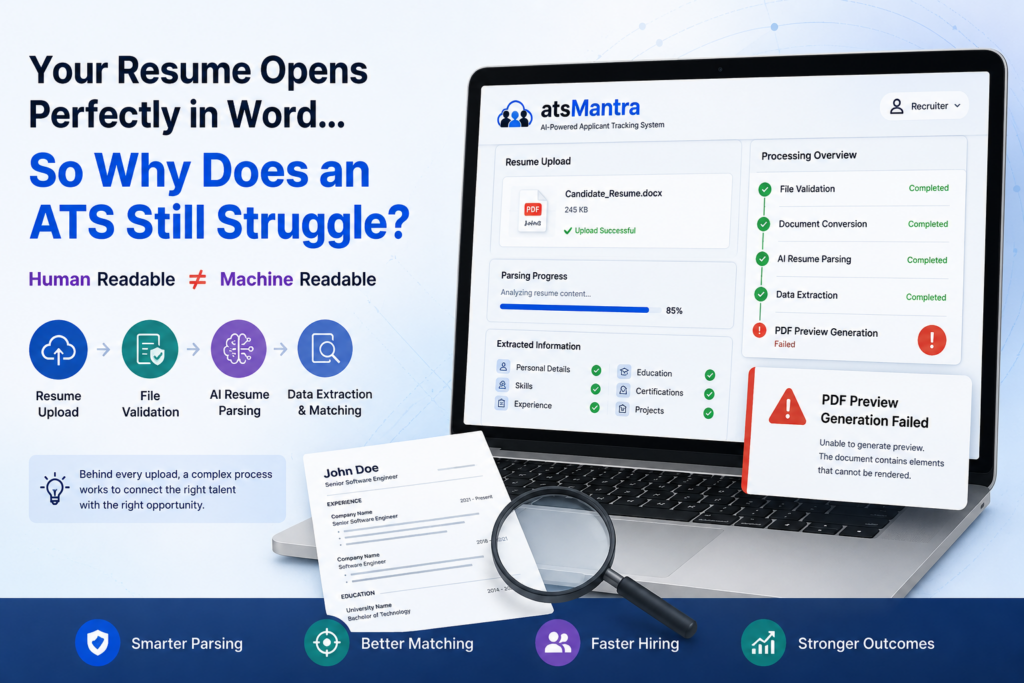
AI-powered ATS resume parsing dashboard processing a machine-readable resume with atsMantra
atsMantra, HR Recruitment, Human Resources

Your Resume Opens Perfectly in Microsoft Word… So Why Does an ATS Still Struggle?

If you’ve ever searched for resume writing tips online, you’ve probably come across the term “ATS-friendly resume.” The advice is almost always the same: Use a simple layout. Avoid too many graphics. Don’t use tables. Save your resume as a DOCX file. Include keywords from the job description. These are all good suggestions, but they don’t tell the complete story. While improving the resume processing engine behind atsMantra, our Applicant Tracking System (ATS), we recently came across a resume that taught us something interesting. The resume looked completely normal. It opened perfectly in Microsoft Word. It opened perfectly in LibreOffice. It passed every file integrity check. It could even be converted into another editable document format without any issues. But when our ATS tried to generate a PDF preview of the resume—a common process used by many recruitment software platforms—it simply refused to complete. That experience reminded us of an important fact. Just because a resume looks perfect to a human doesn’t always mean it’s easy for software to understand. What Does an Applicant Tracking System Actually Do? Many people believe an Applicant Tracking System is simply a place where recruiters store resumes. In reality, modern ATS software does much more. The moment you upload your resume, several automated processes begin working in the background. A typical workflow looks something like this: Resume Upload ↓ File Validation ↓ Document Processing ↓ Resume Parsing ↓ AI-Based Skill Extraction ↓ Experience & Education Detection ↓ Candidate Search & Matching ↓ Recruiter Review Every one of these steps depends on one thing: Your resume must be readable not only by people but also by software. Human-Friendly Doesn’t Always Mean Machine-Friendly When a recruiter opens your resume, they instantly understand the information because the human brain is incredibly good at interpreting layouts and formatting. Software works differently. An AI resume parser or Applicant Tracking System has to understand the structure of the document before it can identify important information such as: Name Contact details Skills Work experience Education Certifications Projects Achievements To do that, it also has to interpret: Fonts Headings Lists Tables Images Document styles Hidden formatting Metadata The more complex a document becomes, the harder it can be for software to process consistently. Fortunately, modern AI has become much better at understanding resumes, but even the best systems occasionally come across documents that present unexpected challenges. Why Resume Formatting Still Matters One of the biggest misconceptions is that ATS-friendly only means adding the right keywords. Keywords are important, but they are only one part of the equation. Your resume should also be: Easy to read Properly structured Consistently formatted Free from unnecessary formatting complexity A resume that has been edited repeatedly over several years, copied between multiple templates, or built using excessive formatting may still look perfect on screen while becoming much harder for software to process. Why This Matters for Recruiters Modern recruitment teams receive hundreds—or even thousands—of resumes for a single hiring campaign. To manage this volume efficiently, ATS platforms rely on automation. Today’s recruitment software doesn’t simply store resumes. It can: Generate resume previews Extract candidate information Parse work experience Identify skills Match candidates against job descriptions Perform AI-powered resume screening Enable advanced candidate search If a resume cannot be processed correctly, some of these automated features may not work as effectively. Thankfully, situations like this are rare, but they highlight why document quality is just as important as document design. How to Make Your Resume More ATS-Friendly Whether you’re actively looking for a job or simply keeping your resume updated, following a few simple practices can improve compatibility with almost every Applicant Tracking System. ✔ Use a recent version of Microsoft Word or another reliable document editor. ✔ Keep formatting clean and consistent. ✔ Avoid unnecessary graphics, floating text boxes, and decorative elements. ✔ Use commonly available fonts. ✔ Save a fresh copy instead of continuously editing the same document for years. ✔ Always review both the DOCX and PDF versions before submitting your application. These simple steps improve both readability and machine compatibility. The Future Is About Machine-Readable Resumes As Artificial Intelligence becomes a bigger part of recruitment, resume processing is evolving rapidly. Today’s AI-powered Applicant Tracking Systems don’t just search for keywords. They understand context, identify skills, analyse experience, and help recruiters find the right candidates much faster. But every AI system still depends on one thing: A well-structured, machine-readable document. Perhaps it’s time we stop thinking only about creating an ATS-friendly resume. Instead, we should focus on creating machine-readable resumes—documents that are easy for recruiters to read and equally easy for modern recruitment software and AI to understand. Final Thoughts The resume that inspired this article eventually taught us something much more valuable than a technical lesson. It reminded us that every resume is unique. Behind every upload is a document created using different templates, different software, and different editing habits. Building an Applicant Tracking System that can successfully process this incredible variety is far more challenging than it appears—and that’s exactly the kind of challenge we enjoy solving at RARR Technologies. Every edge case helps us improve atsMantra, making it smarter, more reliable, and better prepared for the diverse resumes that recruiters receive every day. Nishant Kapoor July 30, 2026 atsMantra, HR Recruitment, Human Resources

Corporate Culture, Human Resources

Cultural Fit for Gen Z: How to Attract and Retain the New Workforce

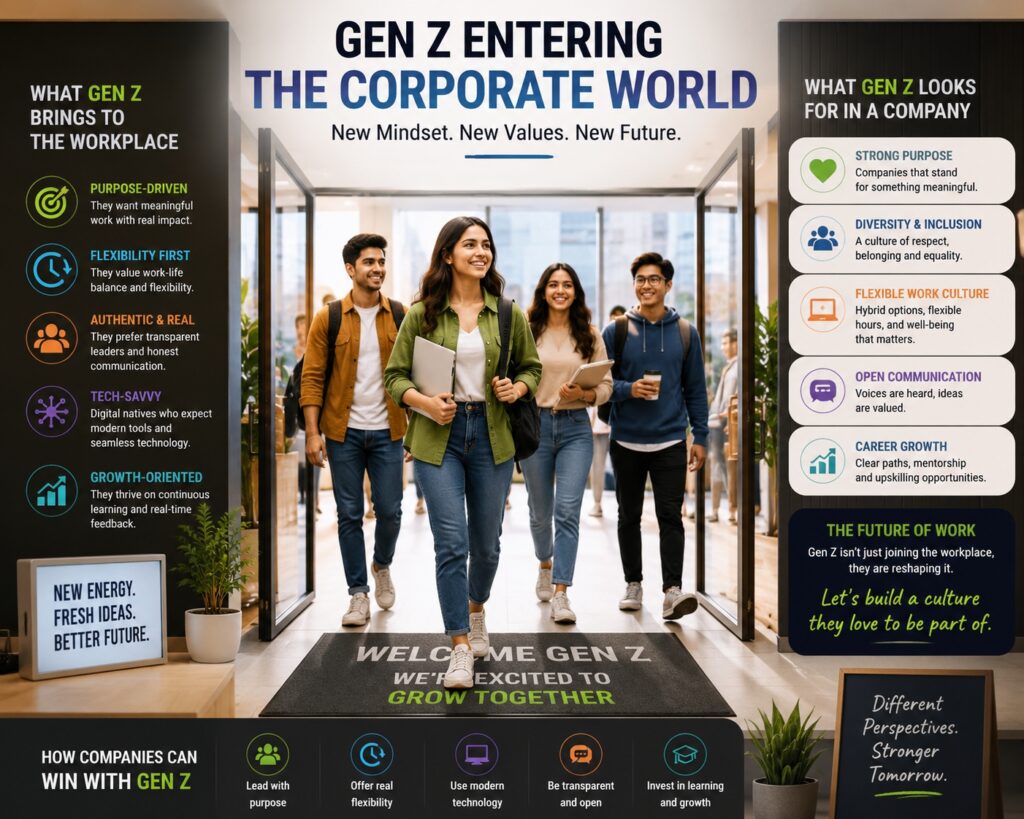
Why Cultural Fit for GenZ Matters Gen Z is no longer the future workforce—they are actively shaping today’s workplace. Born between 1997 and 2012, this generation brings new expectations, strong values, and a fresh perspective on work culture. For HR professionals, recruiters, staffing agencies, and founders, understanding cultural fit for Gen Z is essential to attract, engage, and retain top talent. Unlike previous generations, Gen Z prioritizes: Purpose over paycheck Flexibility over rigid schedules Authenticity over hierarchy This shift is redefining how companies hire, manage, and build workplace culture. What is Cultural Fit for Gen Z? Traditional Cultural Fit (Old Approach) Previously, cultural fit meant hiring candidates who: Shared similar backgrounds Had matching personalities Could easily “blend in” While this created comfort, it often resulted in: Limited diversity Reduced innovation Lack of fresh perspectives Modern Cultural Fit (Gen Z Approach) Today, cultural fit has evolved. For Gen Z, it focuses on: Alignment with values, not personalities Contributing to culture, not just adapting Encouraging diversity and inclusion It’s no longer about “fitting in”—it’s about adding value. Key Traits of Gen Z Employees Understanding Gen Z at work is the foundation of building the right culture. Digital NativesThey expect fast, seamless, and tech-enabled systems. Purpose-DrivenThey want meaningful work that creates real impact. Authenticity-FocusedThey prefer transparent leadership and honest communication. Independent Yet CollaborativeThey value autonomy but also thrive in team environments. Growth-OrientedThey seek continuous learning and real-time feedback. What Cultural Fit Means for Gen Z in the Workplace 1. Flexibility and Work-Life Balance Gen Z strongly prefers: Remote or hybrid work models Flexible working hours Mental health awareness Organizations offering flexibility often attract more Gen Z talent than those offering higher salaries. 2. Purpose-Driven Work Culture Gen Z evaluates employers based on: Mission and vision Social and business impact Companies with a clear purpose and strong values stand out in hiring. 3. Diversity and Inclusion For Gen Z, diversity is not optional—it’s expected. They look for: Inclusive hiring practices Equal growth opportunities Representation in leadership A lack of diversity can significantly impact your employer brand. 4. Technology-Driven Workplace Outdated systems are a major turn-off. Gen Z expects: Modern tools and platforms Automated workflows Seamless digital experiences 5. Continuous Feedback and Growth Traditional annual reviews no longer work. Gen Z prefers: Real-time feedback Regular performance check-ins Clear career growth paths Why Traditional Hiring Fails with Gen Z Many organizations still follow outdated hiring practices, leading to: Hiring for similarity instead of value Rigid hierarchical structures Lack of flexibility Poor communication Ignoring employee feedback The result is high attrition, low engagement, and weak employer branding. How to Build a Culture That Attracts Gen Z To align with Gen Z expectations, companies must evolve. Define and Communicate Your Purpose Clearly highlight your mission, vision, and impact. Offer Real Flexibility Adopt hybrid models, flexible hours, and respect work-life boundaries. Invest in Modern Technology Upgrade hiring, collaboration, and performance systems. Promote Transparency Encourage open communication across all levels. Focus on Learning and Growth Provide: Upskilling programs Mentorship opportunities Clear career progression How Recruiters Can Assess Cultural Fit for Gen Z Recruiters and staffing agencies play a critical role in hiring Gen Z talent. Ask the Right Questions What type of work environment helps you perform best? What motivates you beyond salary? How important is flexibility in your role? Evaluate Beyond Skills Focus on: Value alignment Adaptability Communication style Use Modern Hiring Tools Advanced ATS platforms can help match candidates based on both skills and cultural preferences. Common Mistakes to Avoid When hiring Gen Z, avoid: Assuming Gen Z is lazy or entitled Offering superficial perks instead of meaningful work Ignoring employee feedback Using outdated hiring processes Lack of transparency Gen Z values authenticity over surface-level benefits. Conclusion: Building a Future-Ready Workplace Understanding cultural fit for Gen Z is not about changing everything—it’s about evolving with the workforce. Gen Z is driving organizations toward: Inclusive work cultures Flexible work environments Purpose-driven missions Technology-enabled processes Companies that adapt will not only attract Gen Z talent but also build stronger, future-ready organizations. Because today, culture isn’t just about fitting in—it’s about growing together. Tarun Singla July 23, 2026 Corporate Culture, Human Resources

HR Recruitment, Human Resources

Decoding Digital Personal Data Protection Bill 2023 (DPDPB)

Introduction: In an era defined by unprecedented technological advancements and the widespread use of digital platforms, the need to protect personal data has taken center stage. India, as one of the world’s largest and fastest-growing digital economies, has recognized the urgency of this matter and introduced the Digital Personal Data Protection Bill. This landmark legislation aims to establish a comprehensive framework for safeguarding individual privacy and ensuring responsible data management in the digital realm. The Digital Personal Data Protection Bill was introduced as a response to growing concerns about the misuse of personal data, data breaches, and the need to align India’s data protection standards with international norms, such as the General Data Protection Regulation (GDPR) in the European Union. The bill reflects India’s commitment to providing its citizens with a robust legal foundation for digital privacy rights. Key Provisions of the Bill An applicant tracking system, or ATS, is a tool that enables your company to track and measure each step of its recruitment process. An ATS collects and stores information about your applicants, such as where they were sourced and which stage of the application process they are at. Modern applicant tracking systems are more than a glorified spreadsheet. Today’s ATS includes end-to-end hiring solutions, like scheduling tools, candidate relationship management (CRM) software, and seamless integration with your human resource information system. An ATS transforms your recruitment process into a streamlined, efficient, and technologically advanced operation.  How do applicant tracking systems work?  Candidates are looking for application processes that are easy and user-friendly. The best applicant tracking systems allow people to easily apply for a position via any device without needing to log in.  This means that employers benefit from securing a larger pool of applicants, who can then be tagged a labelled accordingly, based on the info in their resumes.  More specifically, what are the benefits of an applicant tracking system?  Streamlining your hiring process becomes seamless with the implementation of an Applicant Tracking System (ATS). Imagine navigating through the pain points of your hiring workflow without a robust platform in place. In the absence of an efficient system, you might encounter inconsistencies in candidate tracking and misalignments among your hiring team, particularly if you rely on spreadsheets and emails. Building a robust talent pool and identifying top-notch candidates may prove challenging. The entire hiring journey, from job postings to interview scheduling and offer issuance, could be needlessly prolonged and arduous.  However, life post-ATS implementation presents a markedly improved scenario.  A reliable ATS:  Building a robust professional network is crucial for freelance recruiters. It is essential to establish connections with both clients and potential candidates. Actively participate in industry events, join professional associations, and leverage social media platforms to expand your network. Cultivate relationships by maintaining regular contact and offering assistance or insights whenever possible. On the other side, a good ATS: 

Scroll to Top