
How to Choose the Best Manufacturing ERP Software in India
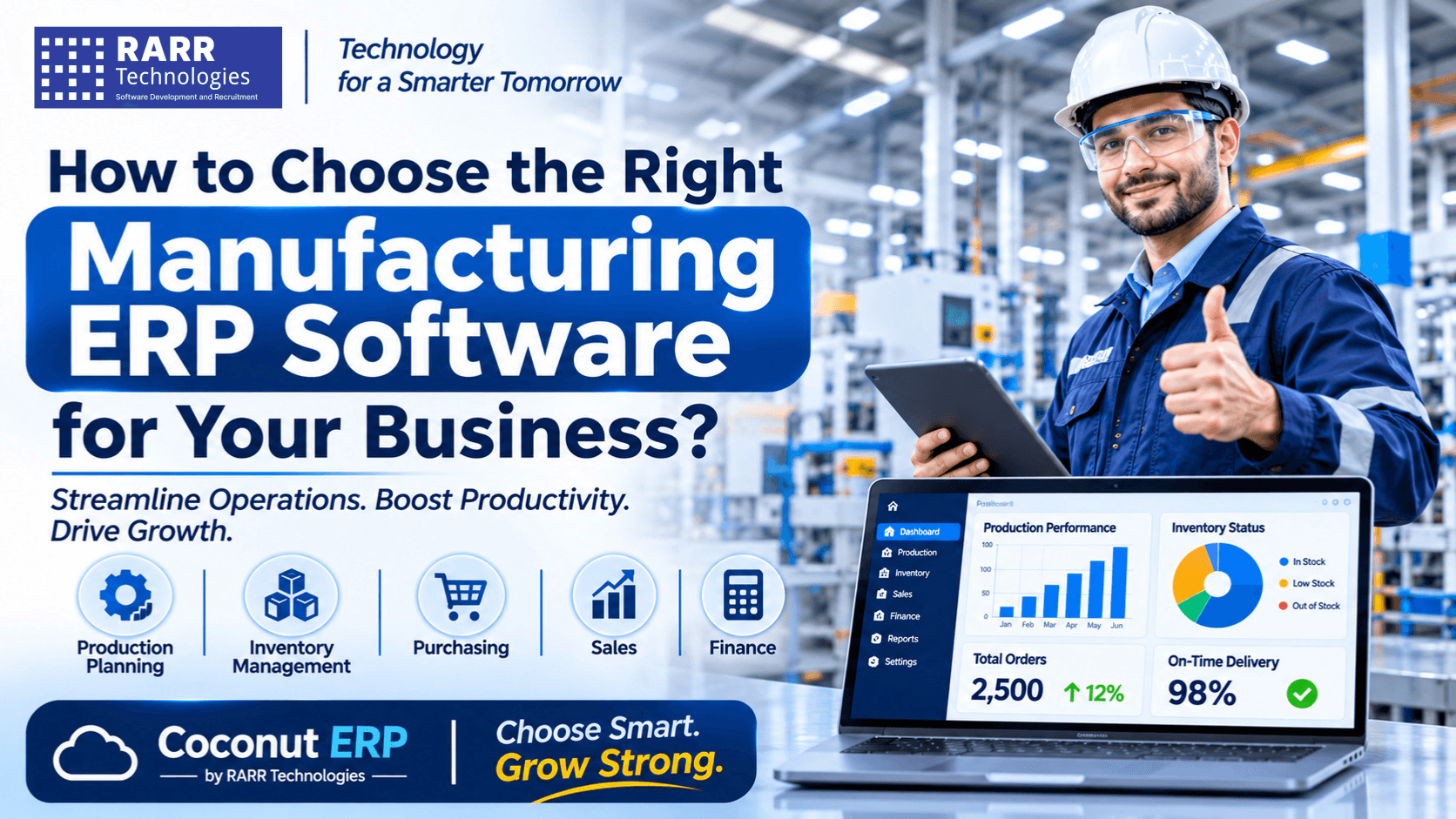
The manufacturing industry is turning out to be very competitive. Manufacturers have to coordinate manufacturing schedules, sourcing, inventory, labor force, supplies, orders and shipping schedules without compromising on product quality and cost of operation. It becomes quite difficult managing all these factors using spreadsheets or individual software application.
Here comes the role of ERP Software for manufacturing companies. The Manufacturing ERP software integrates various business functions into one and helps manufacturers increase their productivity and keep track of operations and also make wise business decisions.
But choosing the right ERP is not that easy. Several software applications come in the market, each of them differing in features, pricing structures and capacities. A wrong choice will lead to various complications in implementation of the system, costs and user acceptance.
That is why knowing How to Choose the Best Manufacturing ERP Software becomes so important before buying the software application. Whether you own a small factory, a growing manufacturing firm or an industrial organization, having the right ERP software for manufacturing firm is crucial.
This guide discusses some important aspects that need to be considered while choosing manufacturing ERP software application.
What Is Manufacturing ERP Software?
Manufacturing ERP Software is a kind of a business management system that brings together various manufacturing processes via a single centralized platform. This helps the company handle production, inventory, purchasing, sales, finance, warehousing and many other processes within the business.
Rather than using various tools for managing various aspects of the business, the company can access the entire information regarding the business from one platform.
For instance, when the company receives an order from the client, the ERP software will be able to handle material requirements, planning, availability of materials and order fulfillment.
A modern manufacturing ERP system could be composed of the following:
• Production planning and scheduling
• Material and inventory management
• Purchasing and procurement management
• Warehouse management
• Sales and orders management
• Bill of Materials (BOM)
• Work order management
• Quality control
• Financial and accounting management
• Business analytics and reporting
By bringing these functions together, manufacturing ERP software helps businesses gain better visibility and control over their daily operations.
Why Do Manufacturing Businesses Need ERP Software?
The manufacturers have to coordinate several processes at once. One mistake in inventory calculation, in production scheduling or purchasing, can impact the whole process of production.
ERP system will help to cope with the problems faced by manufacturers.
1. Production Planning Improvement
Planning of production is one of the most significant processes for the manufacturing company. It is necessary to provide proper coordination of machines, labour, raw materials and production schedule.
ERP software will allow you to control manufacturing processes, production planning, work orders and production progress. It will improve the efficiency of the resources' use and eliminate delays.
2. Effective Inventory Management
It is crucial to keep the appropriate inventory level for continuous manufacturing process. Too many materials result in higher costs for storage, and too little may postpone the manufacturing processes.
ERP system will help you control the status of raw materials, work in progress and finished goods.
3. Lowering the Cost of Operations
Repetitive tasks, documentation, unnecessary resource consumption – all these things characterize manual processes. ERP software will automate several activities of the business.
4. Improved Coordination Among Departments
Production, sales, procurement, accounts, and warehousing departments usually rely on each other’s data.
ERP facilitates coordination among all departments by providing access to the company’s common data.
5. Real-Time Business Information
Information is vital for manufacturing firms to make the right decisions.
ERP dashboard provides information about performance of production, inventory, procurement processes and business operations in general.
How to Choose the Best Manufacturing ERP Software
Choosing the right ERP system entails much planning. You shouldn’t just go for software systems that have all the capabilities but rather find out if they are what your business needs.
The following are some of the critical considerations you need to make:
1. Get to know your Manufacturing Business Requirements
Before looking at possible ERP systems, it is crucial to know where the current problems of your business lie.
Each manufacturing business is unique. For example, a textile business may need production and materials management, while a car maker needs components management, quality checking, and suppliers management.
Start by finding out the operational requirements:
• Do you have any inventory management issues?
• Do you find it hard to schedule production?
• Is material purchasing tough to handle?
• Do you require more visibility in the warehouse?
• Do your employees depend too much on spreadsheets?
• Do you need any processes automated?
• Do you require better financial and production reporting?
Create a list of your business requirements and prioritise them. This will help you identify an ERP system that matches your manufacturing processes
2. Look for Complete Production Management Features
Production management forms an essential requirement for manufacturing firms. Your ERP software must facilitate production management, from material management to finished products.
Some of the features to look out for are:
• Production planning & scheduling
• Bill of Material (BOM)
• Work orders
• Materials Requirement Planning (MRP)
• Production management
• Machine and resources utilization
• Work in progress
• Production reporting
Such functionalities help manufacturers manage their production process in a better way.
While selecting your Best ERP Software for Factory Management see whether the software supports your current production process without any unwanted modifications.
3. Evaluate Inventory and Warehouse Management
The management of inventory influences production efficiency and the profitability of an enterprise.
Proper manufacturing ERP software is supposed to give an insight on raw materials, components, semi-finished goods and finished products.
The key elements of the inventory include:
• Stock control in real-time
• Stock transfer between warehouses
• Batch and serial number control
• The minimum and maximum stock level
• The management of materials issuing and receipt
• The valuation of stock
• The reports on inventory movements
• The management of purchases and reorders
If, for instance, an enterprise gets a new production order, the ERP system is expected to assist in finding out if the necessary raw materials are present.
4. Choose Cloud-Based or On-Premise ERP Software
Deployment technology is yet another critical criterion in determining which ERP to opt for.
Organizations have the choice to go for either the cloud-based or the on premise type of ERP systems.
Cloud-Based ERP Systems
Cloud-Based Manufacturing ERP Software is a computer program that permits authorized persons to access company information via an internet-enabled platform. Depending on the provider and setup, one can access this information from different geographical locations without having to set up all the infrastructure for the system.
Its advantages are:
• Access to company information remotely
• Minimal need for infrastructure setup of servers
• Updates are easier
• Scaleability
• Friendly to collaborate across multiple locations
• Potential reduction in infrastructure costs at the start
On Premise ERP Systems
This is the ERP system that is installed and hosted within the organization’s infrastructure.
It could be the best for organizations that need better control over their hosting environment and infrastructure.
5. Check Whether the ERP Is Suitable for Your Industry
Not all ERP systems are designed for all manufacturing industries.
Each industry has unique requirements of production process, compliance and inventory management.
Therefore, choose software that is compatible with your manufacturing operations.
For instance:
ERP Software for Automobile Manufacturing
The manufacture of automobiles requires components, suppliers, production process and quality standards.
A good ERP should have the following features:
• Management of components and raw materials
• Production planning
• Bill of Material
• Supplier management
• Inventory management
• Quality control
• Work order management
ERP Software for Textile Manufacturing
Textile companies work on various fabrics, colours, sizes, manufacturing processes and materials.
The useful ERP functions could be:
• Management of fabrics and raw materials
• Production planning
• Batch management
• Purchase management
• Order tracking
• warehouse management
• Quality management
In the same way, the food processing, pharmaceuticals, plastics, chemicals and engineering manufacturing industries can use the ERP systems depending on their business needs.
6. Consider Your Business Size and Budget
The ERP software should be compatible with both your existing needs and future plans.
While a large organization may have the requirement of customization and integration, a small manufacturing organization would like to go for an affordable and easy solution.
If your organization is a small/medium size manufacturing business then you should check out the Best ERP Software for Small Manufacturing Businesses.
When comparing the ERP systems, the following factors can be taken into account:
• Cost of the software
• Implementation cost
• User license cost
• Training cost
• Customization cost
• Maintenance cost
• Tech support cost
• Integration cost
Any business looking for Affordable Manufacturing ERP Software for Small Businesses needs to consider value and not necessarily the lowest cost.
The best value ERP software must solve important issues for you, help grow the business and give ROI.
7. Check Integration Capabilities
Manufacturing businesses often use different applications for accounting, customer management, sales, procurement and communication.
Your ERP software should support integration with relevant business applications.
Important integration possibilities include:
• Accounting and financial systems
• CRM software
• E-commerce platforms
• Barcode scanners
• Business intelligence tools
• Payment systems
• Supplier and customer applications
Proper integration reduces duplicate data entry and helps maintain consistency across business operations.
Before purchasing, confirm which integrations are available and whether additional development or charges are required
8. Evaluate Data Security and Access Control
Manufacturing companies manage important business information, including customer details, supplier records, pricing, financial information and production data.
Your ERP provider should offer appropriate security measures to protect this information.
Consider the following:
• Role-based user access
• Secure login and authentication
• Data backup and recovery
• Data encryption
• User activity monitoring
• Access permissions
• Security updates
• Disaster recovery arrangements
Also ask the vendor where business data is hosted and what security responsibilities belong to the provider and your organisation.
9. Check Reporting and Analytics Features
The reports help the manufacturing manager assess business performance and determine areas that need improvement.
An ideal ERP solution needs to have some useful dashboards and reports such as:
• Production performance
• Inventory performance
• Purchase cost
• Sales performance
• Order performance
• Material performance
• Production costs
• Financial performance
For instance, a production manager will be able to look at production reports to assess delays, and an inventory manager will be able to assess stock reports to determine slow-moving materials.
10. Evaluate Vendor Support and Training
ERP implementation goes beyond the purchase of the software alone. The employees need to know how to use the system.
The best ERP vendor will provide adequate support for its implementation and training for the staff and technical support.
Before choosing the vendor, check if:
• The vendor offers implementation services
• The vendor provides training for the employees
• Technical problems are handled promptly
• The vendor updates the software
• The software is customizable
• The vendor supports business growth in the future
Good vendor support makes all the difference in ERP implementation.
What Are the Benefits of Manufacturing ERP Software for MSMEs?
The manufacturing companies that are small and medium in size work under limited resources. Working in multiple activities manually makes growth of business difficult.
That is why Manufacturing ERP for MSME in India is turning out to be an essential thing for business organisations.
Here are some of the main advantages of the same:
Efficient Utilization of Resources
ERP software will enable manufacturers to keep a check on materials, manufacturing activities and other resources which would lead to efficient utilization of manpower, machines and inventories.
Cost Management
The organization would be able to keep a track of their purchases, material costs and production expenses.
Decrease in Manual Activity
Manual tasks would decrease due to automation as the need for paperwork and repeated data entry would decrease.
Better Customer Service
Due to better visibility of orders and coordination in production process, it would become easy for business organizations to fulfill customer demands.
Helpful in Business Expansion
The growing manufacturing activity would increase the challenges of managing multiple orders, suppliers, manpower and inventories.
Common Mistakes to Avoid When Selecting Manufacturing ERP Software
Using an inappropriate ERP system may be costly and cause a lot of trouble for companies. Here are some mistakes companies should avoid when implementing ERP.
1. Choosing Software Solely Based on Cost
The most affordable software may not have everything you need for your business. Consider all factors including functionality and maintenance costs.
2. Disregarding the Importance of Employee Training
People working in your company will be the end users of the software. Proper training will help them use the software better.
3. Not Considering Future Requirements
Select software that can accommodate more users and business operations in case you expand.
4. Disregarding Data Migration
Data migration from other software applications should be considered. Improper data migration may influence inventory and accounting systems.
5. Not Using a Product Demonstration
Ask for a product demo of the software and test it by using your own business situations.
Manufacturing ERP Software in India: What Should Businesses Consider?
Indian manufacturing industry comprises various types of enterprises ranging from small workshops and MSMEs to larger industrial organizations.
Manufacturing ERP Software in India should cater to local business needs as well as the needs of current manufacturing process.
In analyzing the Best Manufacturing ERP Software in India the following factors need consideration:
• Accounting and taxation functions specific to India
• Features related to GST, if any
• Purchase and supplier management
• Inventory and warehouse management
• Production planning and management
• User flexibility
• Business reporting
• Implementation and technical support in India
• Scalability for the future
Enterprises looking for ERP Software for Manufacturing Companies in India should also consider the experience of the software provider in the particular industry.
Instead of picking popular software, analyze whether it matches your business needs.
Why Consider RARR Technologies for Manufacturing ERP Solutions?
Picking the appropriate technological partner is as essential as picking the ERP system itself.
RARR Technologies is the provider of business technology solutions with the aim of helping the organizations to better their operations and digital capabilities.
Coconut ERP offered by RARR Technologies is worth considering by the business interested in checking the integrated ERP system to manage their business processes.
Some of the areas that manufacturers could consider Coconut ERP for their needs are:
• Management of business processes
• Management of inventories and stocks
• Operations of purchase and sale
• Operations related to production
• Business information management centrally
• Operational reports
The suitability of an ERP system depends on its modules and configuration.
For a manufacturing organization, they need to ask for a demonstration and discuss their production process and inventories needs.
For more information, visit: https://rarrtech.com/coconut-erp/
Final Thoughts
Selecting an appropriate ERP software for manufacturing purposes can be a critical decision for any business which will affect productivity, efficiency and future growth of a business.
ERP software which fits your manufacturing process well, ensures efficient inventory management and better production planning, offers business reporting and scalability for the future is what you should be looking for.
Be it small scale manufacture, medium scale manufacture or large scale manufacturing business, spend some time and evaluate various ERP solutions to make your selection.
Compare and analyse the features, cost of implementation, suitability of the software to the industry, capability of software to integrate and other vendor support services. However, most importantly ask for product demonstration of the software.
With the right software and approach to implementation, manufacturing ERP software will help your business become more organised, efficient and data driven.
Looking for a suitable ERP solution for your manufacturing business?
Check out Coconut ERP provided by RARR Technologies which offers an integrated ERP platform for your business management needs.
Visit: https://rarrtech.com/coconut-erp/
Frequently Asked Questions (FAQs)
1. What is the best ERP software for manufacturing businesses?
The best ERP software depends on business size, industry, production processes, inventory requirements and budget. Businesses should compare features, scalability, integrations and vendor support before selecting a solution.
2. Which ERP software is best for small manufacturing businesses?
Small manufacturing businesses should look for ERP software that offers essential production management, inventory tracking, purchasing, sales and reporting features at a suitable cost. Ease of use and implementation support are also important.
3. How much does manufacturing ERP software cost in India?
The cost varies depending on the number of users, software modules, deployment model, customisation, integrations and implementation requirements. Businesses should request a customised quotation from ERP providers.
4. Is cloud-based ERP suitable for manufacturing companies?
Yes. Cloud-based ERP can be suitable for manufacturing companies that need remote access, centralised business information and flexible scalability. However, businesses should evaluate internet connectivity, security and hosting requirements.
5. What are the most important features of manufacturing ERP software?
Important features include production planning, inventory management, purchase management, Bill of Materials, work order management, warehouse management, financial management and business reporting.
Tarun Singla
Technical Contributor & Solutions Architect at RARR Technologies
Leave a Comment
Your email address will not be published. Required fields are marked *